Approximately 1,700 scientists visit SSRL annually to conduct experiments in broad disciplines including life sciences, materials, environmental science, and accelerator physics. Science highlights featured here and in our monthly newsletter, Headlines, increase the visibility of user science as well as the important contribution of SSRL in facilitating basic and applied scientific research. Many of these scientific highlights have been included in reports to funding agencies and have been picked up by other media. Users are strongly encouraged to contact us when exciting results are about to be published. We can work with users and the SLAC Office of Communication to develop the story and to communicate user research findings to a much broader audience.
Science Highlight Archive Science Highlight Banner Images
Hydrogen Storage in Platinum-Single-Walled Carbon Nanotube Composites at Near Ambient Conditions through "Spillover" Mechanism
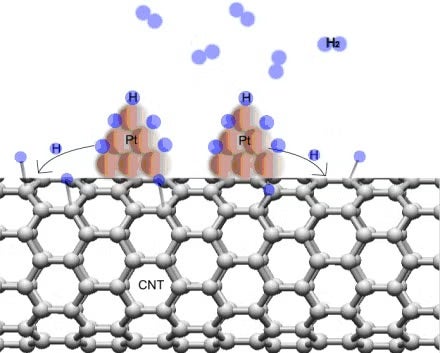
To expand the use of hydrogen in mobile applications—such as hydrogen-powered buses and cars—researchers will need to design lightweight, compact means of storing it.
From a Single-Band Metal to a High-Temperature Superconductor via Two Thermal Phase Transitions
The nature of the pseudogap, which exists above the superconducting transition temperature (Tc) of high-Tc cuprate superconductors, is one of the most important unsolved problems in condensed matter physics.
Electronic Structure of O2-Bound Metal Sites in Biomimetic Model Complexes
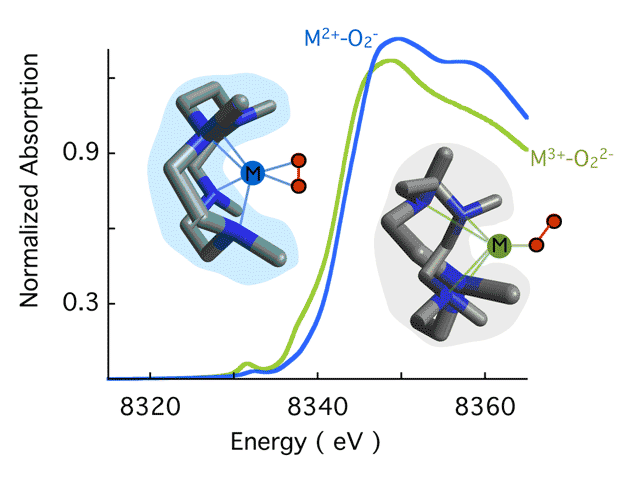
Dioxygen (O2), critical for many of our cellular processes, is carried and activated by a variety of enzymes.
Effects of Thermal Annealing On the Morphology of Polymer–Fullerene Blends for Organic Solar Cells
Easy to Get In, Hard to Get Out: X-ray Structure and Mechanism of RNA Polymerase II Stalled at an Antineoplastic Monofunctional Platinum-DNA Adduct
Cisplatin, a platinum-based anti-cancer drug, is a widely-used and effective cancer chemotherapy drug. It slows the growth of cancer cells by inhibiting transcription through DNA modification, creating chemical links that serve as a roadblock as the polymerase attempts to transcribe the DNA into RNA.
Collaborate on Science Highlights
We can work with users and the SLAC Office of Communication to develop the story and to communicate user research findings to a much broader audience.