Approximately 1,700 scientists visit SSRL annually to conduct experiments in broad disciplines including life sciences, materials, environmental science, and accelerator physics. Science highlights featured here and in our monthly newsletter, Headlines, increase the visibility of user science as well as the important contribution of SSRL in facilitating basic and applied scientific research. Many of these scientific highlights have been included in reports to funding agencies and have been picked up by other media. Users are strongly encouraged to contact us when exciting results are about to be published. We can work with users and the SLAC Office of Communication to develop the story and to communicate user research findings to a much broader audience.
Science Highlight Archive Science Highlight Banner Images
Natural Prion Structure is Very Different from the Structure of Recombinant Prion Protein Amyloid
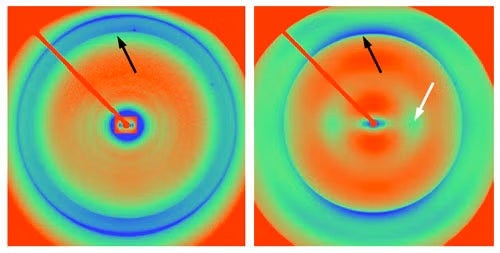
While the normal function of human prion protein (PrP) remains a mystery, the results of abnormal PrP are quite well known.
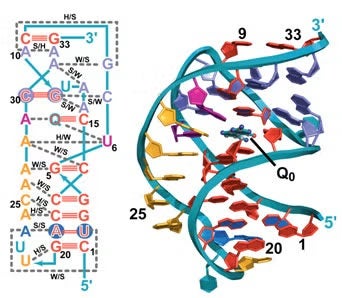
Allosteric Modulation of DNA by Small Molecules
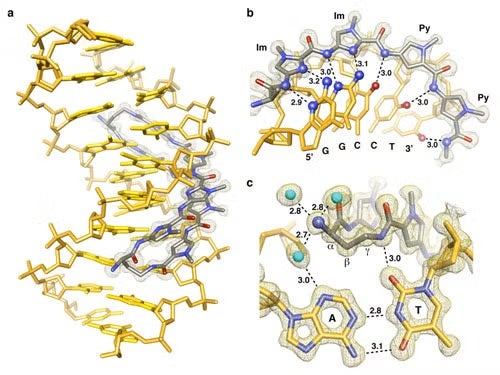
Biological macromolecules, like proteins and nucleic acids, are good examples of the form follows function paradigm; and, in the case of these molecules, deformation follows function as
Geometric and Electronic Structures of the Ni(I) and Methyl-Ni(III) Intermediates of Methyl-Coenzyme M Reductase
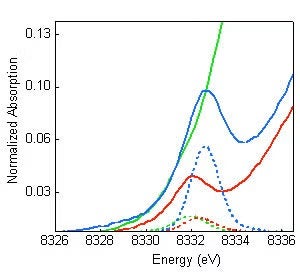
In the atmosphere, methane is a much more potent greenhouse gas than carbon dioxide, trapping 20 times more heat.
The Inhomogeneous Structure of Water at Ambient Conditions
Water has unusual and complex properties that make it especially well suited to support life.
Lack of a Jahn-Teller Distortion in La1-xSrxCoO3 Determined by EXAFS and Neutron PDF Studies
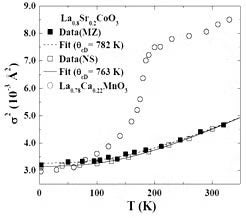
The arrangement of atoms in molecules and complexes that include atoms with many interacting electrons can be hard to predict.
Expanded Intermediate-State Structure of a Bacterial Mechanosensitive Channel

You have probably never seen a bacteria pop. Yet, as solution-filled balloons, bacterial cells are susceptible to changes in pressure.
Understanding Charge Transport in Plastic Electronics
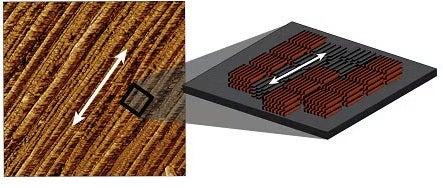
Recent advances in materials research are setting the stage for macroelectronics to have a disruptive effect on everyday technology.
Structure of Pentacene Monolayers on Amorphous Silicon Oxide and Relation to Charge Transport
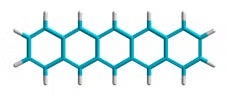
Nothing seems to move as fast as the field of consumer electronics.
Bimolecular Crystals of Fullerenes in Conjugated Polymers and the Implications of Molecular Mixing for Solar Cells
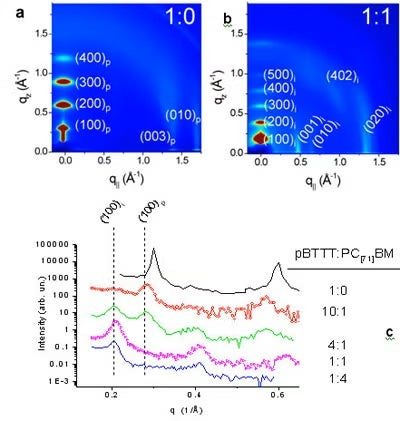
Solar panels contain a number of solar cells that convert light into electricity.
Collaborate on Science Highlights
We can work with users and the SLAC Office of Communication to develop the story and to communicate user research findings to a much broader audience.