Approximately 1,700 scientists visit SSRL annually to conduct experiments in broad disciplines including life sciences, materials, environmental science, and accelerator physics. Science highlights featured here and in our monthly newsletter, Headlines, increase the visibility of user science as well as the important contribution of SSRL in facilitating basic and applied scientific research. Many of these scientific highlights have been included in reports to funding agencies and have been picked up by other media. Users are strongly encouraged to contact us when exciting results are about to be published. We can work with users and the SLAC Office of Communication to develop the story and to communicate user research findings to a much broader audience.
Science Highlight Archive Science Highlight Banner Images
Controlling Protein Aggregation: Lessons from Fungi
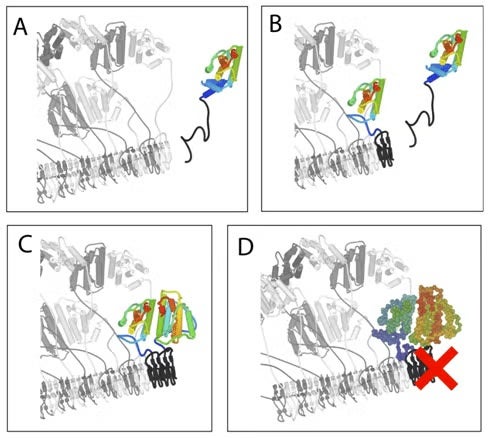
Unlike all other fatal infectious agents, which contain DNA and/or RNA, prions—the perpetrators behind Creutzfeldt-Jakob and mad cow diseases—are composed only of a protein
Fragile Magnetic Ground State in Half-Doped Manganite: Orbital Instability
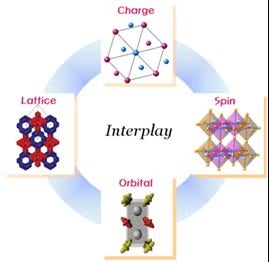
New, designer materials—the ones that can carry a charge without depleting it or offer dramatically faster, more efficient computer memory—take advantage of the interpla
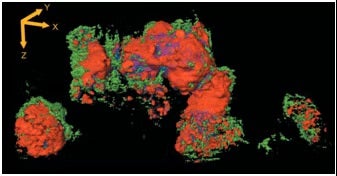
Techniques for Identifying and Mapping Iron Species in Geologic Samples
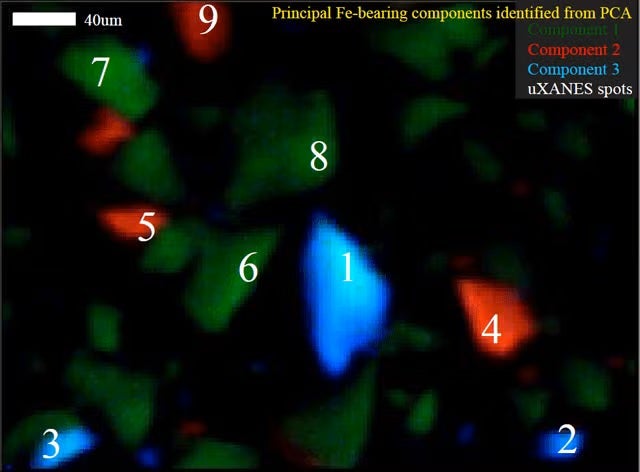
Iron, one of the most abundant metals on Earth’s surface, often dominates t
Symmetry Breaking Orbital Anisotropy in Iron-based Superconductors
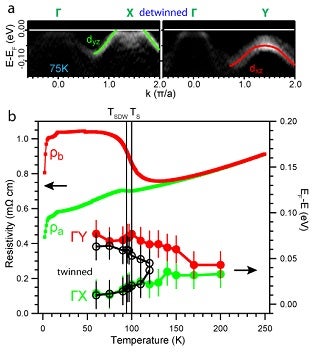
Over the past 25 years, two families of materials have been discovered that allow electricity to flow without resistance at surprisingly high temperatures.
Crystal Structures of Two Viral IRES RNA Domains Bound to the 70S Ribosome
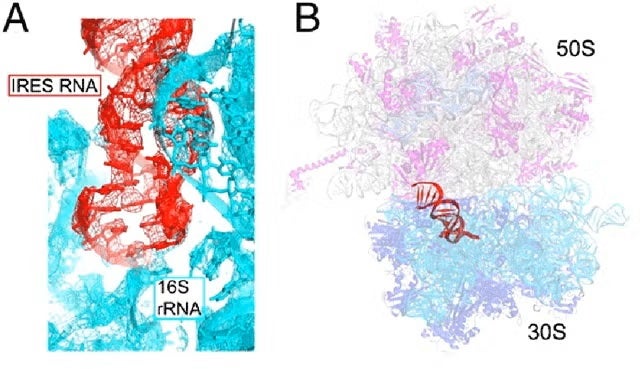
Viruses are dependent on the cellular machinery of their host cells, and often evolve tricks that allow them to sidestep the usual cellular protocols and more efficiently take advant
Hydrogen Storage in Platinum-Single-Walled Carbon Nanotube Composites at Near Ambient Conditions through "Spillover" Mechanism
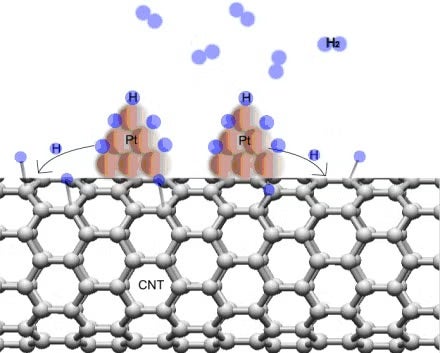
To expand the use of hydrogen in mobile applications—such as hydrogen-powered buses and cars—researchers will need to design lightweight, compact means of storing it.
Collaborate on Science Highlights
We can work with users and the SLAC Office of Communication to develop the story and to communicate user research findings to a much broader audience.