Approximately 1,700 scientists visit SSRL annually to conduct experiments in broad disciplines including life sciences, materials, environmental science, and accelerator physics. Science highlights featured here and in our monthly newsletter, Headlines, increase the visibility of user science as well as the important contribution of SSRL in facilitating basic and applied scientific research. Many of these scientific highlights have been included in reports to funding agencies and have been picked up by other media. Users are strongly encouraged to contact us when exciting results are about to be published. We can work with users and the SLAC Office of Communication to develop the story and to communicate user research findings to a much broader audience.
Science Highlight Archive Science Highlight Banner Images
Systematic Expansion of Porous Crystals to Include Large Molecules
Recently, scientists at the University of California, Berkeley and Lawrence Berkeley National Laboratory and their collaborators synthesized a series of metal-organic frameworks (MOFs) with pores up to 98 Å in diameter—large enough to house protein molecules.
X-rays Illuminate a Microscopic Picture of the Correlation between Nitrogen-dopant Bond Type and Electronic Effects in Single-layer Graphene
Doping graphene with small amounts of another element such as nitrogen or boron enables scientists to "tune" its properties to make it more suitable for a variety of applications, such as contact material in solar cells.
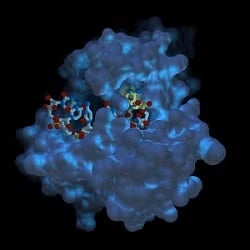
Structural Basis for Iron Piracy by Pathogenic Neisseria
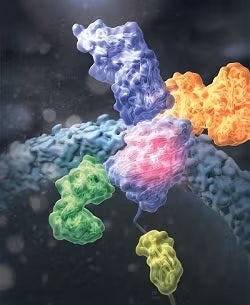
Of the 11 species of Neisseria bacteria that colonize humans, 9 of them coexist peacefully with us. However, two can cause serious diseases N.
Unusual Structure and Dynamics of an Artificial Enzyme Created in a Test Tube
In recent years, enzymes have gained an important role in industry as cheap and environmentally friendly alternatives to traditional chemical catalysts. Learning to create such enzymes from scratch is necessary in order to provide biocatalysts for the wealth of non-natural reaction chemistries and substrates that have emerged over the last century.
Competing Phases Found in High-Temperature Superconductor
Although the behavior of conventional superconductors has been explained via the BCS theory, the mechanism of superconductivity in the cuprate high temperature superconductors remains unresolved. One approach to this problem is to explore the phases next to superconductivity on the temperature-doping phase diagram.
Navigating Fermi Arcs
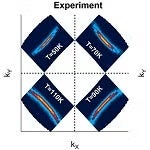
In solids, Fermi surfaces are the boundaries between occupied and unoccupied electron levels, as defined in momentum space.
Fischer-Tropsch Catalyst Nanoscale Chemistry under Realistic Working Conditions
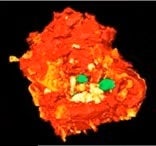
Olefins are the basic building blocks for many products from the petrochemical industry and are currently produced by steam cracking of naphtha or ethane, but inc
The Chemistry of Bromine in Terrestrial and Marine Environments
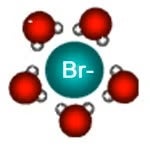
Recent work at SSRL has helped reveal a previously unrecognized wealth of bromine chemistry in the environment, where bromine in seawater has long been thought to exist as inorganic bromide
Collaborate on Science Highlights
We can work with users and the SLAC Office of Communication to develop the story and to communicate user research findings to a much broader audience.