Approximately 1,700 scientists visit SSRL annually to conduct experiments in broad disciplines including life sciences, materials, environmental science, and accelerator physics. Science highlights featured here and in our monthly newsletter, Headlines, increase the visibility of user science as well as the important contribution of SSRL in facilitating basic and applied scientific research. Many of these scientific highlights have been included in reports to funding agencies and have been picked up by other media. Users are strongly encouraged to contact us when exciting results are about to be published. We can work with users and the SLAC Office of Communication to develop the story and to communicate user research findings to a much broader audience.
Science Highlight Archive Science Highlight Banner Images
Marine Diatoms Survive Iron Droughts in the Ocean by Storing Iron in Ferritin
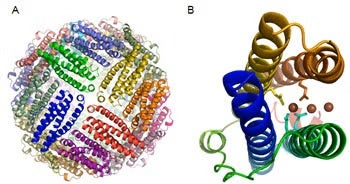
Diatoms, unicellular algae that exist almost anywhere there is water, have recently attracted attention as potential thwarters of climate change.
Importance of Iron Speciation to Aerosol Solubility: Potential Effects of Aerosol Source on Ocean Photosynthesis

The world's animals depend on plants, plants depend on photosynthesis, and photosynthesis depends on iron.
The Source of Airborne Lead: Recycling Pb-Contaminated Soils
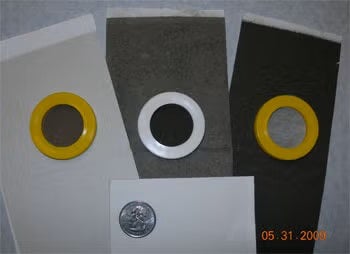
The amount of lead particulates in air has decreased significantly as the U.S. began adopting the use of unleaded gasoline and lead limits in the 1970s.
Br-rich Tips of Calcified Crab Claws are Less Hard but More Fracture Resistant: A Comparison of Mineralized and Heavy-element Biological Materials
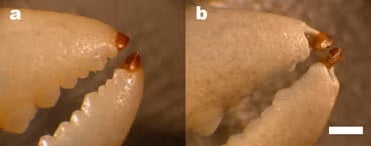
The tips of crab pincers are made of a very hard material, allowing the crab to fight and forage for food without wearing down their tools.
Visualizing Brain Metals in Health and Disease
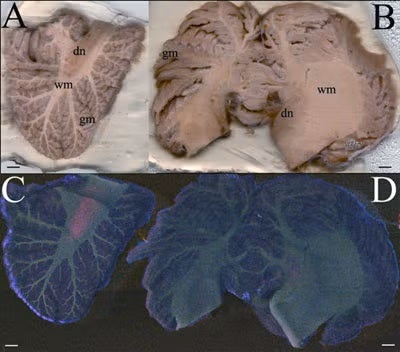
Metals such as iron, copper, and zinc are critical for brain function, where they serve various roles, such as enzyme cofactors or neurotransmitters.
Potential Implications for Cataract Formation - Redox Changes at the Sulfur Atom of Methionine
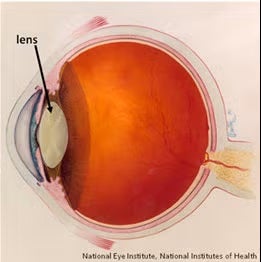
In a similar way to your old pick-up truck rusting in the driveway, your body experiences a continuous battle against the elements.
An Unusual Mechanism for the Antimicrobial Target Flavine-dependant Thymidylate Synthase (FTDS)
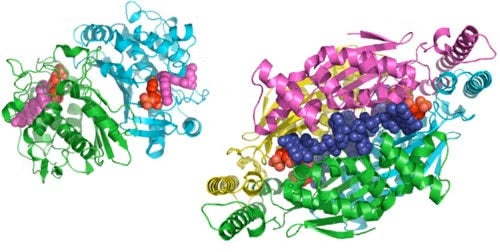
Before DNA is made, the subunits composing DNA must be made.
Structure of P-Glycoprotein Reveals a Molecular Basis for Poly-specific Drug Binding
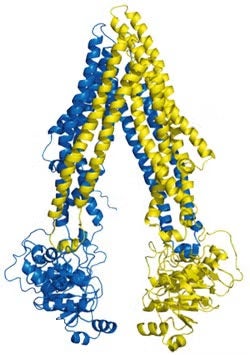
Medications can be rendered ineffective through cells developing multidrug resistance. This is the case in many forms of cancer cells that fail to respond to chemotherapy.
Structural Studies of Nitric Oxide Synthase Inhibitor Complexes: An Anchored Plasticity Approach for Selective Enzyme Inhibition
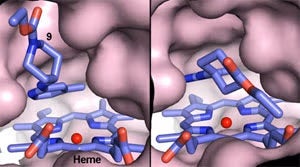
Nitric oxide (NO) is one of very few gaseous signaling molecules in humans. NO causes smooth muscles to relax and blood vessels to open.
Structural and Functional Basis for Broad-spectrum Neutralization of Avian and Human Influenza Viruses
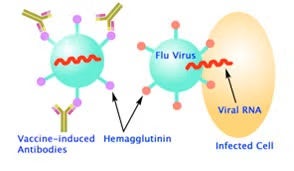
Scientists have recently identified a family of human antibodies that can take out an unprecedented number of different types of flu viruses, including H5N1 'bird flu' and the 19
Collaborate on Science Highlights
We can work with users and the SLAC Office of Communication to develop the story and to communicate user research findings to a much broader audience.