Approximately 1,700 scientists visit SSRL annually to conduct experiments in broad disciplines including life sciences, materials, environmental science, and accelerator physics. Science highlights featured here and in our monthly newsletter, Headlines, increase the visibility of user science as well as the important contribution of SSRL in facilitating basic and applied scientific research. Many of these scientific highlights have been included in reports to funding agencies and have been picked up by other media. Users are strongly encouraged to contact us when exciting results are about to be published. We can work with users and the SLAC Office of Communication to develop the story and to communicate user research findings to a much broader audience.
Science Highlight Archive Science Highlight Banner Images
Spectroscopic Evidence for the Phase Competition between the Pseudogap and High-Tc Superconductivity
Graphene Produces More Efficient Charge Transport Inside an Organic Semiconductor
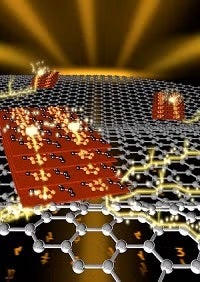
Graphene – a one-atom thick sheet of carbon – shows great promise for future electronics.
CRISPR RNA-guided Surveillance in Escherichia Coli
With more viruses that infect bacteria than any other type of biological entity, bacteria have developed a sophisticated means of defending themselves. At the heart of their defenses is a system called CRISPR (short for Clustered Regularly Interspaced Short Palindromic Repeat).
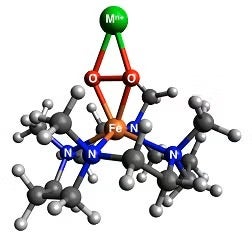
A New Link between Human and Bacterial Signaling Machineries
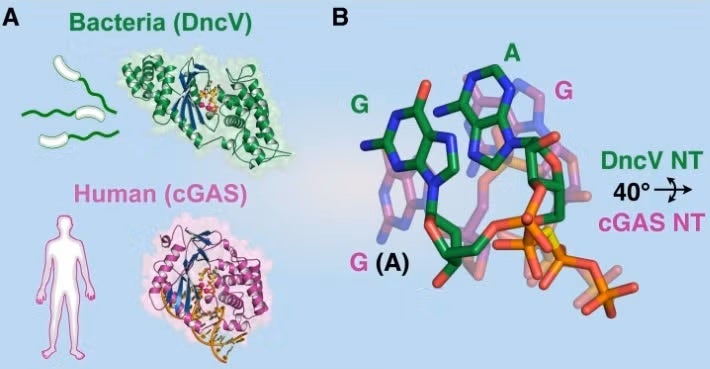
Sensor proteins that detect bacteria and viruses are key players of the human immune system.
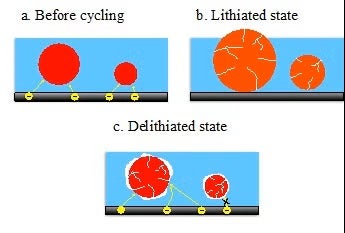
Nanoscale Morphological and Chemical Changes of High Voltage Lithium-Manganese Rich NMC Composite Cathodes with Cycling
Responsible, eco-friendly and sustainable use of energy is one of the biggest challenges in today’s world. Current rates of energy consumption demand the development of efficient ways to store energy, for instance in safe and durable rechargeable batteries. However, repeated charge cycles degrade batteries over time, eventually leading to their failure.
Mass-selected Nanoparticles of PtxY as Model Catalysts for Oxygen Electroreduction
Polymer electrolyte membrane fuel cells (PEMFCs), which electrochemically transform hydrogen and oxygen into water, hold the promise to generate electricity in an environmentally friendly and sustainable manner and could, one day, replace batteries in zero-emission vehicles.
Collaborate on Science Highlights
We can work with users and the SLAC Office of Communication to develop the story and to communicate user research findings to a much broader audience.