Approximately 1,700 scientists visit SSRL annually to conduct experiments in broad disciplines including life sciences, materials, environmental science, and accelerator physics. Science highlights featured here and in our monthly newsletter, Headlines, increase the visibility of user science as well as the important contribution of SSRL in facilitating basic and applied scientific research. Many of these scientific highlights have been included in reports to funding agencies and have been picked up by other media. Users are strongly encouraged to contact us when exciting results are about to be published. We can work with users and the SLAC Office of Communication to develop the story and to communicate user research findings to a much broader audience.
Science Highlight Archive Science Highlight Banner Images
Towards Understanding Anthrax: Structural Basis of Target Recognition by Anthrax Lethal Factor
Formation of Chlorinated Hydrocarbons in Weathering Plant Material
When we think of chlorine, we often relate it to the salt used in food preparation, chloride in the oceans, chlorine gas from swimming pools, and gaseous chlorofluorocarbons that have close links to the depletion of stratospheric ozone. We rarely think of thousands of chlorinated hydrocarbons that exist in the natural systems, several of which are highly toxic to humans (1).
Solving a Forefront Problem in Materials Science: The Magnetic and Chemical Structures of a Buried Interface
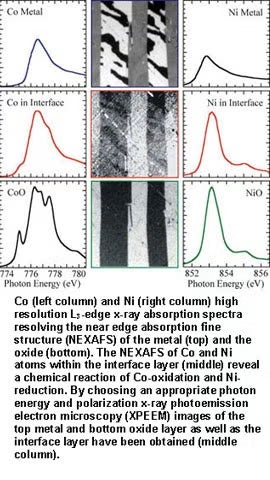
Computer hard drives and other advanced electronic devices depend on layered stacks of magnetic and non-magnetic materials, but researchers don't fully understand why such layered materials
A New Approach to 3D Structures of Biomolecules Utilizing Single Molecule Diffraction Images
Protein crystallography can routinely determine the 3D structure of protein molecules at near atomic or atomic resolution. The bottleneck of this methodology is to obtain sizable and good quality protein crystals. Overcoming the crystallization difficulty requires the development of the new methodologies. One approach is to use NMR to image protein molecules in solvent.
Complex Materials Research by Angle-Resolved Photoemission Spectroscopy: Challenging the Mystery of the High Tc Superconductivity

Extensive research efforts to study the novel electronic properties of high-Tc superconductors and their related materials by angle-resolved photoemission spectroscopy at a r
The Story Behind IBM's New Flat Panel Displays: Technical Impact of Synchrotron Radiation Research
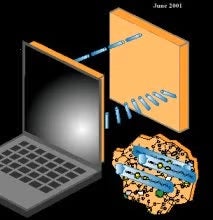
Today's laptop computers utilize flat panel displays where the light transmission from the back to the front of the display is modulated by orientation changes in liquid crystal (LC) mo
Collaborate on Science Highlights
We can work with users and the SLAC Office of Communication to develop the story and to communicate user research findings to a much broader audience.