Approximately 1,700 scientists visit SSRL annually to conduct experiments in broad disciplines including life sciences, materials, environmental science, and accelerator physics. Science highlights featured here and in our monthly newsletter, Headlines, increase the visibility of user science as well as the important contribution of SSRL in facilitating basic and applied scientific research. Many of these scientific highlights have been included in reports to funding agencies and have been picked up by other media. Users are strongly encouraged to contact us when exciting results are about to be published. We can work with users and the SLAC Office of Communication to develop the story and to communicate user research findings to a much broader audience.
Science Highlight Archive Science Highlight Banner Images
Structural Insights into FeMo Cofactor Biosynthesis
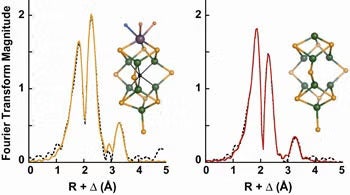
SSRL and Stanford scientists, in collaboration with a team from UC Irvine, have gotten the first look into how the metal active center of an enzyme that is largely responsible for fertilizing
Hydrogenation of Single-walled Carbon Nanotubes
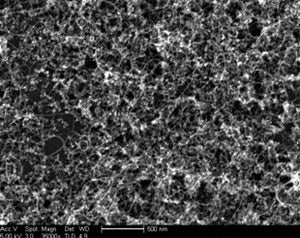
Researchers at SSRL and Stanford have taken a step closer to hydrogen-run cars by adding hydrogen to tiny cylinders made entirely out of carbon.
Reexamination of Lead(II) Coordination Preferences in Sulfur-Rich Sites:Implications for a Critical Mechanism of Lead Poisoning
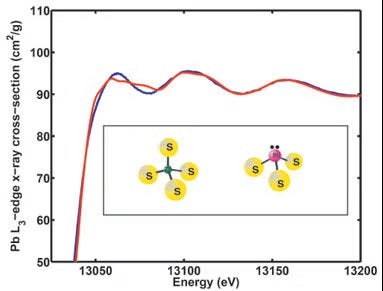
Research performed at SSRL has provided insight into why lead is so damaging to the healthy development of young children.
The Crystal Structure of Human, Nicotine Metabolizing Cytochrome P450 2A6
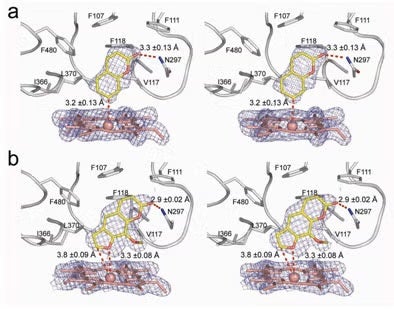
Using x-ray diffraction data collected at SSRL, Scripps researchers Jason Yano, Eric F. Johnson, C.
Following a Structural Phase Transition in Real Time with Atomic Spatial Resolution
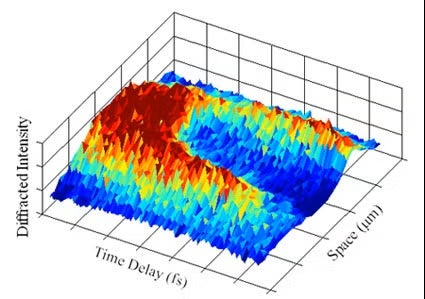
When a snowball melts, you can tell it has achieved a liquid state when the frigid water drips through your fingers.
Sulfur in the Timbers of Henry VIII's Warship Mary Rose: Synchrotrons Illuminate Conservation Concerns
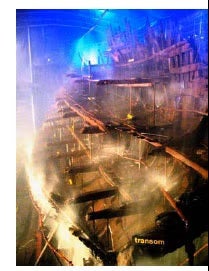
Henry VIII's warship, the Mary Rose, wreaked havoc on the French navy for 34 years until she was wrecked in 1545.
Cationic Liposome-Microtuble Complexes: Lipid-Protein Bio-Nanotubes with Open or Closed Ends
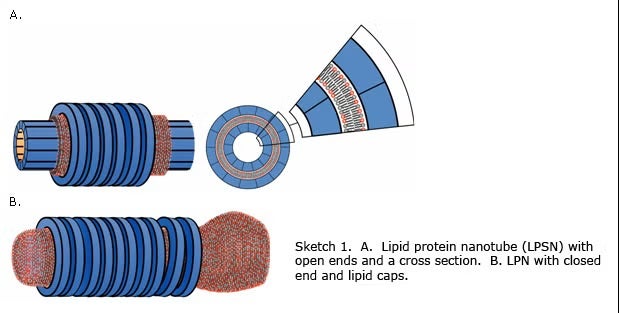
Microtubules, 25 nanometer scale hollow tubules, are critical components in a broad range of functions in eukaryotic cells -- from providing tracks for the transport of cargo to forming the sp
Structure of Human Toll-like Receptor 3(TLR3) Ligand-binding Domain
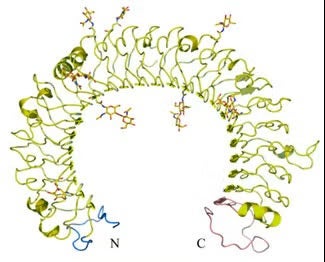
We have to defend ourselves from the challenge of microbial pathogens every day.
Damage by X-rays: A Case Study for Metallo-Protein Crystallography
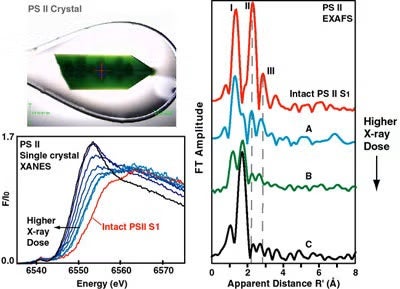
X-rays intended to elucidate the structure of biomolecules may actually damage and alter key parts of the molecules.
Structural Determination of Marine Bacteriogenic Manganese Oxides
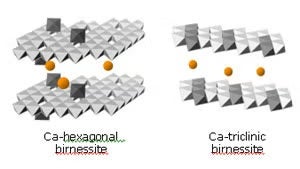
Manganese oxides form in the oceanic water column as a result of the bacterially catalyzed oxidation of a relatively abundant form of dissolved manganese.
Collaborate on Science Highlights
We can work with users and the SLAC Office of Communication to develop the story and to communicate user research findings to a much broader audience.