Approximately 1,700 scientists visit SSRL annually to conduct experiments in broad disciplines including life sciences, materials, environmental science, and accelerator physics. Science highlights featured here and in our monthly newsletter, Headlines, increase the visibility of user science as well as the important contribution of SSRL in facilitating basic and applied scientific research. Many of these scientific highlights have been included in reports to funding agencies and have been picked up by other media. Users are strongly encouraged to contact us when exciting results are about to be published. We can work with users and the SLAC Office of Communication to develop the story and to communicate user research findings to a much broader audience.
Science Highlight Archive Science Highlight Banner Images
Redox-transformation Kinetics of Aqueous Thio-arsenic Species Determining Arsenic Sequestration by Organic Thiol Groups of Peat
Arsenic is a well-known toxin that can contaminate our drinking supplies. Understanding how arsenic finds its way into drinking water requires research into its interaction with environmental conditions that affect redox reactions, including interactions with iron, sulfur, and carbon.
Stable Solvent for Solution-based Electrical Doping of Semiconducting Polymer Films and Its Application to Organic Solar Cells
Organic semiconductors are crystals or thin films composed of carbon-based molecules bonded together though covalent “π-bonds” that provide conductivity. These organic semiconductors can be used for organic photovoltaic (OPV) devices, which show promise as an alternative to traditional solar cells with possible applications in building integrated photovoltaics.
Charge Heterogeneity and Surface Chemistry in Polycrystalline Cathode Materials
Local differences in a battery’s structure and chemistry can lead to problems with function, such local over-charging or under-charging, and can affect the ability to hold charge.
Negative-pressure Polymorphs Made by Heterostructural Alloying
Altering the phase of physical, chemical, pharmaceutical, geologic and other materials can alter their properties and function; these different structures are called polymorphs. Scientists create these polymorphs to discover materials with useful, new properties, often by increasing the ambient pressure during their formation.
Understanding the Reactivity of CoCrMo-implant Wear Particles
During their popularity in the mid 2000’s, CoCrMo-based metal-on-metal (ball in socket) hip implants accounted for about a third of hip replacements in the US. It was believed that this alloy would be longer-lived than previous materials. However, unforeseen issues with mechanical wear and corrosion of the material caused a high failure rate.
Structural Study of Potent Peptidic Fusion Inhibitors of Influenza Virus Hemagglutinin
The influenza virus constantly mutates, helping to make “the flu” a costly human disease year after year. Because of these mutations, flu vaccines change every year and are a best guess of what strains will be dominant in that year’s flu season.
Muscle Disorders at High Resolution: Native American Myopathy and Beyond
Native American Myopathy (NAM) is a genetic disorder that affects about 1 in 5,000 members of the Lumbee in North Carolina. A mutation in the gene stac3 causes a variety of severe symptoms affecting muscles, joints, spine, hearing, breathing, and speech. This gene codes for STAC3 protein, a critical component to the function of the calcium channels of skeletal muscles.
Insights into the Molecular Scale Structure of Electrolyte-Metal Oxide Interface
Since the commercialization of the first rechargeable Li-ion battery (LIB) in 1991, LIBs have become key components in everyday life. However, their energy storage capacity, lifetime, safety, and fast charging/discharging capability still need to be improved in order to meet the increasing demand of key markets, such as the need for long-distance transportation via electric vehicles.
Structural Mechanisms of Histone Recognition by Histone Chaperones
In eukaryotic cells, including human, DNA is kept tidy by wrapping around histone proteins into nucleosome structures. Composed of eight histone proteins, histone assembly requires chaperone proteins, including nucleoplasmin (Npm) specific to histone proteins H2A and H2B and important to early embryonic development.
Questioning the Universality of the Charge Density Wave Nature in Electron-doped Cuprates
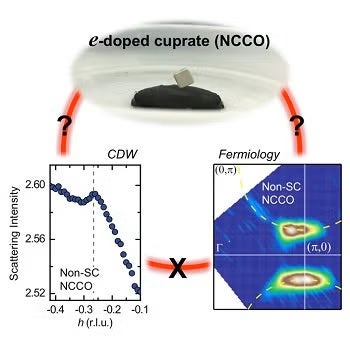
The first superconductor materials discovered offer no electrical resistance to a current only at extremely low temperatures (less than 30 K or −243.2°C).
Collaborate on Science Highlights
We can work with users and the SLAC Office of Communication to develop the story and to communicate user research findings to a much broader audience.