Approximately 1,700 scientists visit SSRL annually to conduct experiments in broad disciplines including life sciences, materials, environmental science, and accelerator physics. Science highlights featured here and in our monthly newsletter, Headlines, increase the visibility of user science as well as the important contribution of SSRL in facilitating basic and applied scientific research. Many of these scientific highlights have been included in reports to funding agencies and have been picked up by other media. Users are strongly encouraged to contact us when exciting results are about to be published. We can work with users and the SLAC Office of Communication to develop the story and to communicate user research findings to a much broader audience.
Science Highlight Archive Science Highlight Banner Images
Remembrance of Things Past
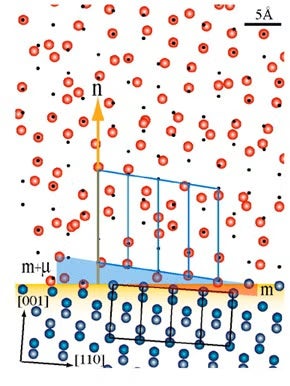
New evidence is overturning the assumption that the thermal oxide grown on single crystal silicon is completely amorphous.
Crystal Structures of Anthrax Toxin Lethal Factor Bound to an Optimized Substrate and Candidate Small Molecule Inhibitors
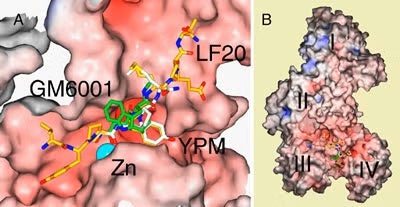
Anthrax makes a deadly cocktail of three toxin proteins that flood the bloodstream, leading to rapid death if the infection is not diagnosed and treated in its early stages.
The Structure of the First Coordination Shell in Liquid Water
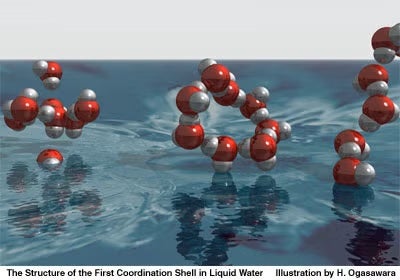
In ice, each water molecule is surrounding by 4 other molecules in a tetrahedral arrangement (left). The new result on liquid water shows that the molecules are connected only with 2 others.
Fighting Antibiotic Resistance: The dapE-encoded N-succinyl-L,L-Diaminopimelic Acid Desuccinylase from Haemophilus influenzae is a Dinuclear Metallohydrolase
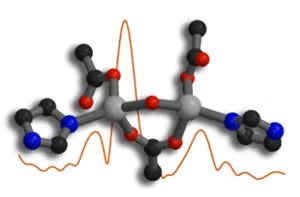
Antibiotics and the bacteria they attack are engaged in a constant race to out-evolve one another.
Chromium Speciation and Mobility in a High Level Nuclear Waste Vadose Zone Plume
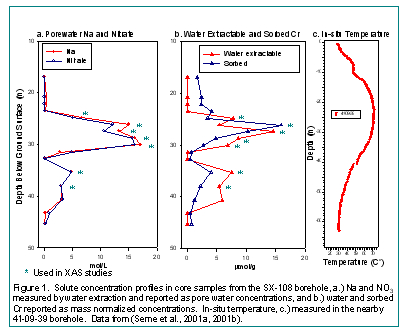
Toxic and carcinogenic chromate (hexavalent chromium as CrO42-) has contaminated the groundwater in Hanford, Washington.
The Emittance Spoiler Foil: A Simple Method to Produce Femtosecond and Sub-Femtosecond X-ray Pulses from a SASE-Based Free-Electron Laser
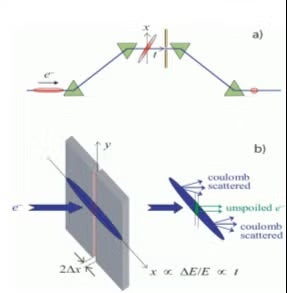
Computer simulations have shown that by using a cleverly placed piece of slotted foil, the Linac Coherent Light Source (LCLS) will be able to produce brilliant x-ray pulses that are extremely
The Crystal Structure of a-Thrombin in Complex with Platelet Glycoprotein (GP) Iba
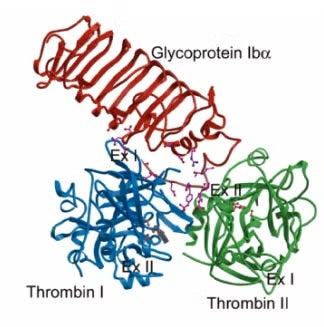
When a blood vessel is cut, the body activates a repair mechanism that eventually seals the cut and prevents further blood loss.
Structure of Actin Cross-linked with a-Actinin: Bundles
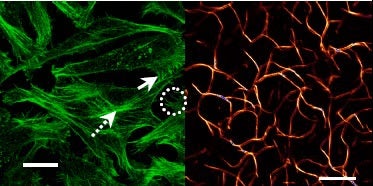
With the completion of the Human Genome Project and the emerging proteomics era, the biosciences community is beginning the daunting task of understanding the structures
Collaborate on Science Highlights
We can work with users and the SLAC Office of Communication to develop the story and to communicate user research findings to a much broader audience.