Approximately 1,700 scientists visit SSRL annually to conduct experiments in broad disciplines including life sciences, materials, environmental science, and accelerator physics. Science highlights featured here and in our monthly newsletter, Headlines, increase the visibility of user science as well as the important contribution of SSRL in facilitating basic and applied scientific research. Many of these scientific highlights have been included in reports to funding agencies and have been picked up by other media. Users are strongly encouraged to contact us when exciting results are about to be published. We can work with users and the SLAC Office of Communication to develop the story and to communicate user research findings to a much broader audience.
Science Highlight Archive Science Highlight Banner Images
Structural Studies of the Didomain of a 6-Deoxyerythronolide B Synthase: Largest Structure/Asymmetic Unit Solved by MAD Technique
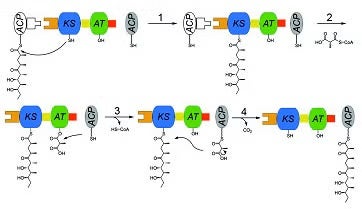
Researchers have obtained the highest-resolution image of a didomain structure in a modular polyketide synthase (PKS), revealing new structural features.
Structural Basis of Transciption: Role of the Trigger Loop in Substrate Specificity and Catalysis
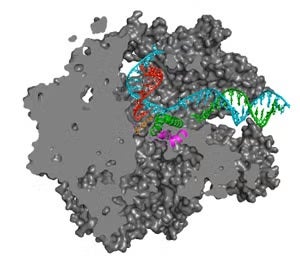
Life as we know it depends on turning on and off the proper genes at the correct time. This process of gene expression starts when an RNA message is copied from DNA.
Compositions of Stardust Impact Tracks and Terminal Particles in Aerogel by Hard X-ray Microprobe at SSRL
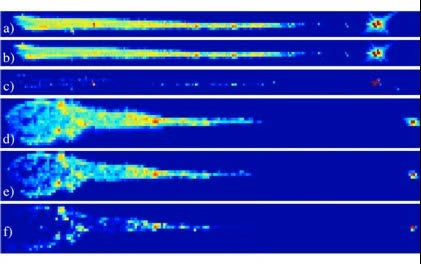
An international collaboration that included researchers at SSRL has used x-ray scanning microprobe fluorescence techniques at BL6-2 to characterize the elemental chemistry of samples from
A Fern Fatale - X-ray Absorption Spectroscopy Imaging of an Arsenic-Loving Fern

The toxicity of arsenic is widely known, but perhaps less widely appreciated is that it's the level of toxicity critically depends on the chemical form.
Femtosecond Diffractive Imaging with a Soft-X-ray FEL
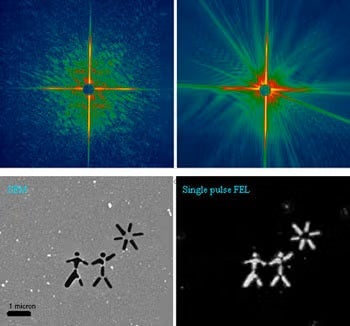
Scientists have for the first time used an extremely short and intense coherent soft x-ray laser pulse to successfully obtain a high-resolution image of a nano-scale object before the sample w
Where Water is Oxidized to Dioxygen: Structure of the Photosynthetic Mn4Ca Cluster
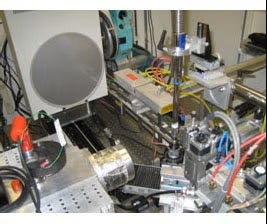
Billions of years ago, primitive bacteria developed a way to harness sunlight to split water molecules into protons, electrons and oxygen-the cornerstone of photosynthesis.
Structural Sequestration of Uranium in Bacteriogenic Manganese Oxides
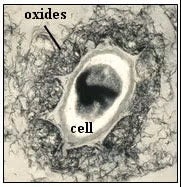
Uranium contamination is a major concern at Department of Energy sites and decommissioned mining and ore processing facilities around the U.S.
In Situ Biological Uranium Remediation within a Highly Contaminated Aquifer
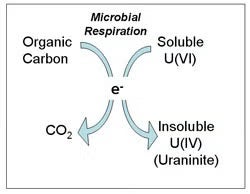
Uranium (U) contamination of ground and surface water is a serious problem in many parts of the world.
Effect of Local Coordination in the Photoluminescence Properties of Er-doped Y2O3 Thin Films
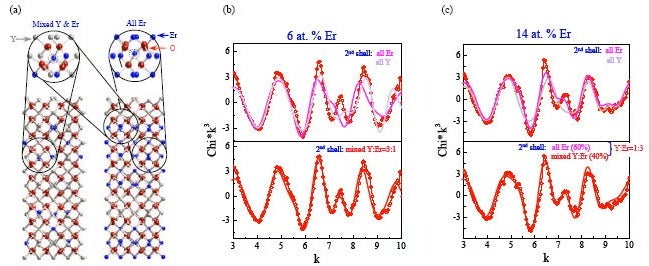
Fiber optic communication relies on the strength of a signal of light to deliver information, but over long distances that signal becomes dim and can lose its integrity.
The Elusive Active Fold of a Catalytic RNA: A Crystal Structure of a Full-Length Hammerhead Ribozyme
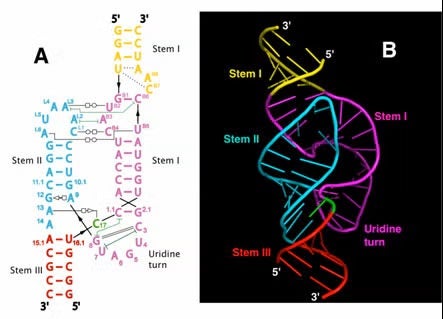
Genes, which are made of nucleic acids (DNA or RNA) contain the instructions for how to make proteins, but still enzymes made of proteins are needed to replGenes, which are made of nucleic
Collaborate on Science Highlights
We can work with users and the SLAC Office of Communication to develop the story and to communicate user research findings to a much broader audience.