Date and Time
Location
Abstract
Photoreceptor proteins use light absorption to elicit a biological response in various processes such as vision, circadian rhythms and plant development. How the initial photochemical events at the receptor’s chromophore funnel through space and time into the desired photobiological event is a focus of intense current research.
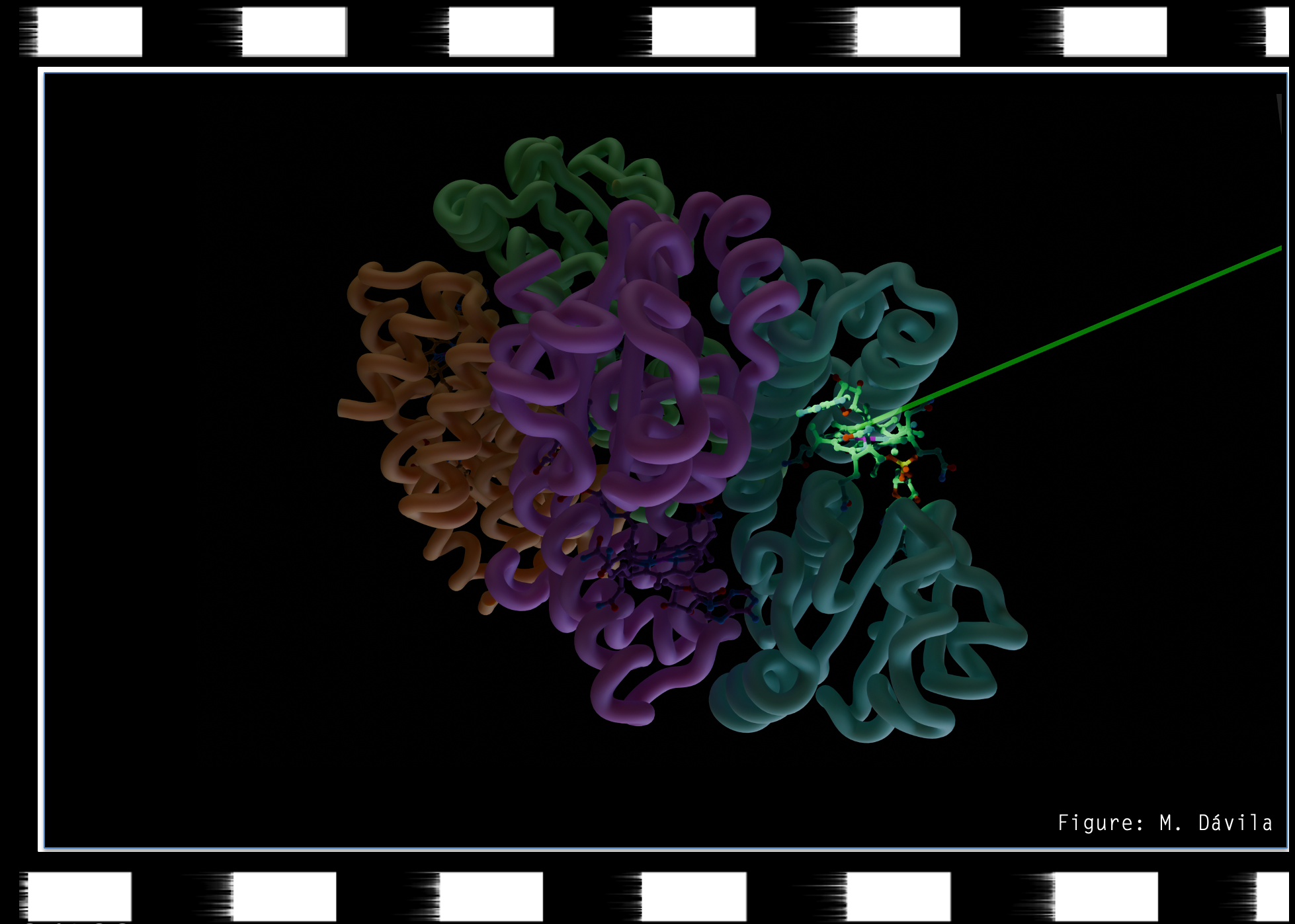
We focus on the CarH photoreceptor, an archetype of the newly discovered superfamily of B12 dependent photoreceptors that surprisingly repurpose and finely tune the ubiquitous vitamin B12 cofactor to sense light. CarH is a tetrameric light-responding repressor of carotenoid gene expression. Upon light-activation, structural changes lead to disassembly of the tetramer and its release from DNA to allow gene transcription. We combined time-resolved serial femtosecond crystallography at XFELs and time-resolved X-ray solution scattering at a synchrotron to study structural changes on the ns to s time-scale that lead from cleavage of the photolabile chromophore bond to tetramer dissociation. Complementing the time-resolved structural studies with results from cryo temperature-controlled X-ray crystallography and in crystallo absorption spectroscopy, from various time-resolved and temperature-controlled spectroscopies and from QM/MM calculations allowed providing and connecting essential pieces in the puzzle of B12 dependent photoreception.
Links
Poster