
|
|
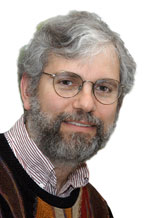
Education: Harvard University A.B. 1975;
University of California, Berkeley M.A. 1978; University of California,
Berkeley Ph.D. 1980.
Professor Bucksbaum has several
research projects in the Randall Laboratory, in the NSF Frontier Center
for Optical Coherent and Ultrafast Science (FOCUS) at the University of
Michigan, and in other laboratories in the United States and Europe.
Most of these activities involve the study of atoms, electrons
, and simple molecules in the presence of ultrahigh intensity coherent light.
The light is produced by pulsed lasers, which generate amplified beams that
can be focused to intensities exceeding an atomic unit, with pulse durations
as short as 20 femtoseconds. The wavelengths extend from the far infrared to
the extreme ultraviolet. In the infrared, this means durations of only
one-half of a field cycle. The principal application of these intense fields
is control of quantum systems. Professor Bucksbaum is en
gaged in experiments that use "half-cycle" pulses to control quantum
"wave packets" in molecules and atoms. His group has built computer
controlled pulse shapers to study problems as diverse as chemical bonds and
quantum chaos. Professor Bucksbaum also uses atomic physics to study
fundamental symmetries in nature. Other experiments include the behavior of
atoms in relativistic plasmas produced by terawatt laser beams, and the
production of coherent vacuum ultraviolet radiation. Graduate students are
involve
d in Professor Bucksbaum's work at all levels, including building the
lasers; designing, building, and performing the experiments; and doing
calculations.
Professor Bucksbaum is a member of the National
Academy of Sciences, a Fellow of the America Physical Society, and the
Optical Society of America. He is Editor of VJUltrafast, the APS Virtual
Journal of Ultrafast Science. He is also a recipient of the 2000 Margaret
and Herman Sokol Faculty Award in the Sciences.
PULSE Center at Stanford University
650-926-5337
phb@slac.stanford.edu
Atomic, Molecular, & Optical Experiment
Non-linear optics, precision measurements, high-intensity physics, ultrafast laser physics
Quantum Phase Retrieval of a Rydberg Wave Packet Using a Half-Cycle Pulse, (J. Ahn, D. N. Hutchinson, C. Rangan, P. H. Bucksbaum), Phys. Rev. Lett. 86, 1179-1182 (2001).
Coherent Control of Pulsed X-ray Beams, (M. F. DeCamp, D. A. Reis, P. H. Bucksbaum, B. Adams, J. M. Caraher, R. Clarke, C. W. S. Conover, E. M. Dufresne, R. Merlin, V. Stoica, and J. K. Wahlstrand), Nature 413, 825-828 (2001).
News and Views: Particles Driven to Diffraction, (P. H. Bucksbaum), Nature 413, 117-118 (2001).
Qua ntum Information Storage and Retrieval in Rydberg Wave Packets, (J. Ahn, T. C. Weinacht, and P. H. Bucksbaum), Science 287, 463 (2000).
Controlling the Shape of a Quantum Wavefunction, (T. C. Weinacht, J. Ahn, and P. H. Bucksbaum), Nature 397, 233 (1998).
Measurement of the Amplitude and Phase of a Sculpted Rydberg Wave Packet, (T. C. Weinacht, J. Ahn, and P. H. Bucksbaum), Phys. Rev. Lett. 80, 5508 (1998).
Ultrafast Structural Changes Measured By Time-Resolved X-ray Diffractio n, (J. Larsson, P. A. Heimann, A. M. Lindenberg, P. J. Schuck, P. H. Bucksbaum, R. W. Lee, H. A. Padmore, J. S. Wark, R. W. Falcone), Applied Physics A 66, 587 (1998).
Resonant Double-Excitation Induced By Wiggling ATI Electrons, (P. H. Bucksbaum, A. Sanpera, and M. Lewenstein), Jour. Phys. B 30, L843 (1997).
Evidence For Resonant Effects in High-Order ATI Spectra, (M. P. Hertlein, P. H. Bucksbaum, and H. G. Muller), Journal of Physics B (Atomic, Molecular and Optical Physics) 30, L197-2 05 (1997).
Redistribution of Atomic Rydberg States By Tunable Narrow Band Picosecond Far-Infrared Pulses, (C. Raman, M. F. DeCamp and P. H. Bucksbaum), Optics Express 1, 186 (1997).